| Culture medium |
BNCC352250 |
| Description |
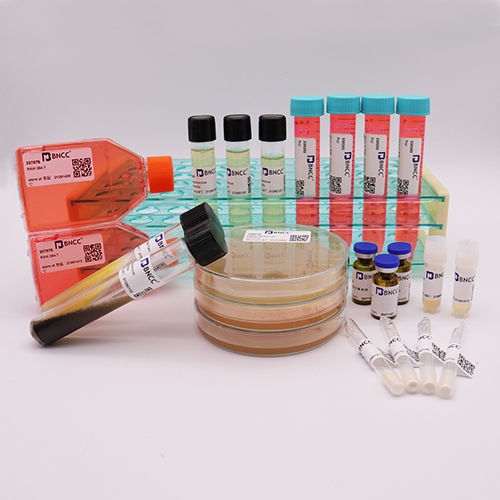
Comprehensive PDA agar |
| Composition |
Potato Infusion Powder:10.0g, Glucose:20.0g, KH2PO4:3.0g, MgSO4.7H2O:1.5g, Thiamine:0.008g, Agar:15.0g, pH:6.0±0.2(25℃) |
| Growth conditions | 28 ° C; 3-5 days; aerobic; |
| Subculture procedure | ① Prepare one test tube containing 5-10 mL of liquid culture medium and two plates; ② Open the safety cabinet, burn the top with an alcohol lamp, quickly drip sterile water to break it, and then use tweezers to crush it; ③ Transfer 0.5mL of liquid culture medium into a freeze-drying tube, dissolve it thoroughly, and then transfer it back into the liquid test tube, mixing well; ④ Transfer 0.2mL of bacterial suspension into a Agar plate, apply evenly, and repeat twice to obtain two plates; ⑤ Place all liquid test tubes and plates under the above cultivation conditions, and the bacterial strains can be used once they grow. |
| Storage conditions | -80 ℃ |
| Safety level | 1 |
| morphology | Colonies initially white or yellowish, mycelium growing rapidly producing a dense layer of erect smooth-stiped, conidiophores terminated by globose vesicles bearing phialides (uniseriate) or metulae with phialides (biseriate) which produce dry chains of conidia. Reverse pale to grayish or greenish yellow. Vesicles radiate, initially pale, becoming dark brown to black. Conidia spherical, mid-to-dark brown, highly roughened with ridges and blunt or pointed protuberances, (3-)4-5(-6) μm in diameter.Sporulation may be inhibited when grown in vessels with reduced gas exchange. Colonies may exhibit sectoring with areas of varying levels of sporulation. Use of freshly produced spores as inoculum should reduce sectoring. |
| Sharing mode | Public welfare sharing |

 - English
 - Japanese

 info@bncc.com