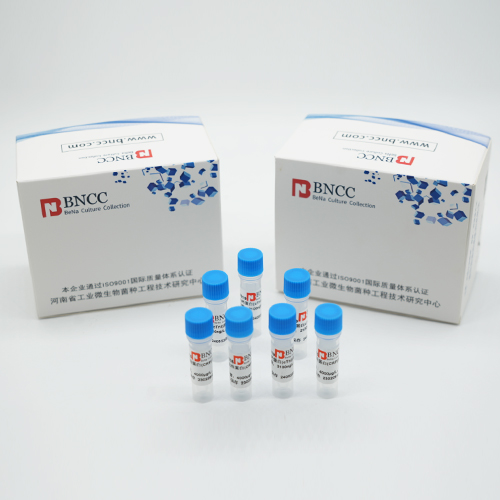
Micromphalle brevipes|143537 |BNCC

BeNa Culture Collection

Micromphalle brevipes-BNCC
  • BNCC
  • Micromphale brevipes-BNCC

Micromphale brevipes

  • Price: Contact
  • number:143537
  • Form:
    Migratory growth, filamentous, irregular edges, white front, yellow back, light color
Standard strain Quantitative strain DNA extraction
Package:
Essential Information Certificate Related Products
Micromphale brevipes
Subculture procedure ① Prepare 1-2 plates as mentioned above; ② After disinfecting the inclined surface of the test tube, open it in the safety cabinet; ③ Cut small square blocks of 0.5 × 0.5cm2 using a sterile inoculation hoe and inoculation shovel (see attached page); ④ Place the small square block flat on the center of the Agar plate and onto the surface of the agar; ⑤ Cultivate the flat Agar plate under the above cultivation conditions, and the strain can be used once it grows.
Growth conditions 28 ℃; 7-10 days; aerobic;
Storage conditions -80℃
Safety level 1
morphology Migratory growth, filamentous, irregular edges, white front, yellow back, light color
Sharing mode Public welfare sharing

1. Description 

1. Name: Marasmius androsaceus

2. BNCC No.: 143537

3. Biosafety level:  4

2. Storage conditions:

Storage of freezed dried ampoule and agar slant at 2°C to 8°C.

3. Growth Conditions: 

1. Comprehensive PDA: potato boil 1.0L, glucose 20.0g,KH2PO4 3.0g,MgSO4.7H2O 1.5g, vitamin B1 trace, agar 20.0g,pH 6.0±0.2. Sterilization at 121 ℃ for 15min. Potato boiling liquid: weigh 200g of peeled potato pieces, boil in boiling water for 30min, and collect the filtrate to a constant volume of 1.0L.

2. Atmosphere: aerobic

3. Temperature:  28 ℃

4. Notes: 

1.Normal culturing time, 24-48hours for bacterial, 72 hours for yeast, 5-7days for mould, 7-10days for fungal.

2.Agar slant shall be inoculated asap, and do not keep the storage for more than 3 months.

3.Please recover the strains in strict accordance with this instruction, otherwise the replacement of the strain are not be available in case of viability loss caused by different media or growth conditions.

4.Waste generated from the handling process should be discarded after high-pressure sterilization.

Download certificate
Please set your password: