Lactobacillus rhamnosus|134426 |BNCC

BeNa Culture Collection

Lactobacillus rhamnosus-BNCC
  • BNCC
  • Lactobacillus rhamnosus-BNCC
  • Lactobacillus rhamnosus-BNCC
  • Lactobacillus rhamnosus-BNCC

Lactobacillus rhamnosus

Literatures(3)
  • Price: Contact
  • number:134426
  • Form:
    The isolate is a pure culture of Gram‑positive (blue‑violet) bacilli. It forms circular, opaque, convex colonies (1–2 mm) with irregular margins, a smooth, white surface, and a moist texture, allowing for easy removal.
Standard strain Quantitative strain DNA extraction
Package:
Essential Information References Certificate Related Products
Lactobacillus rhamnosus
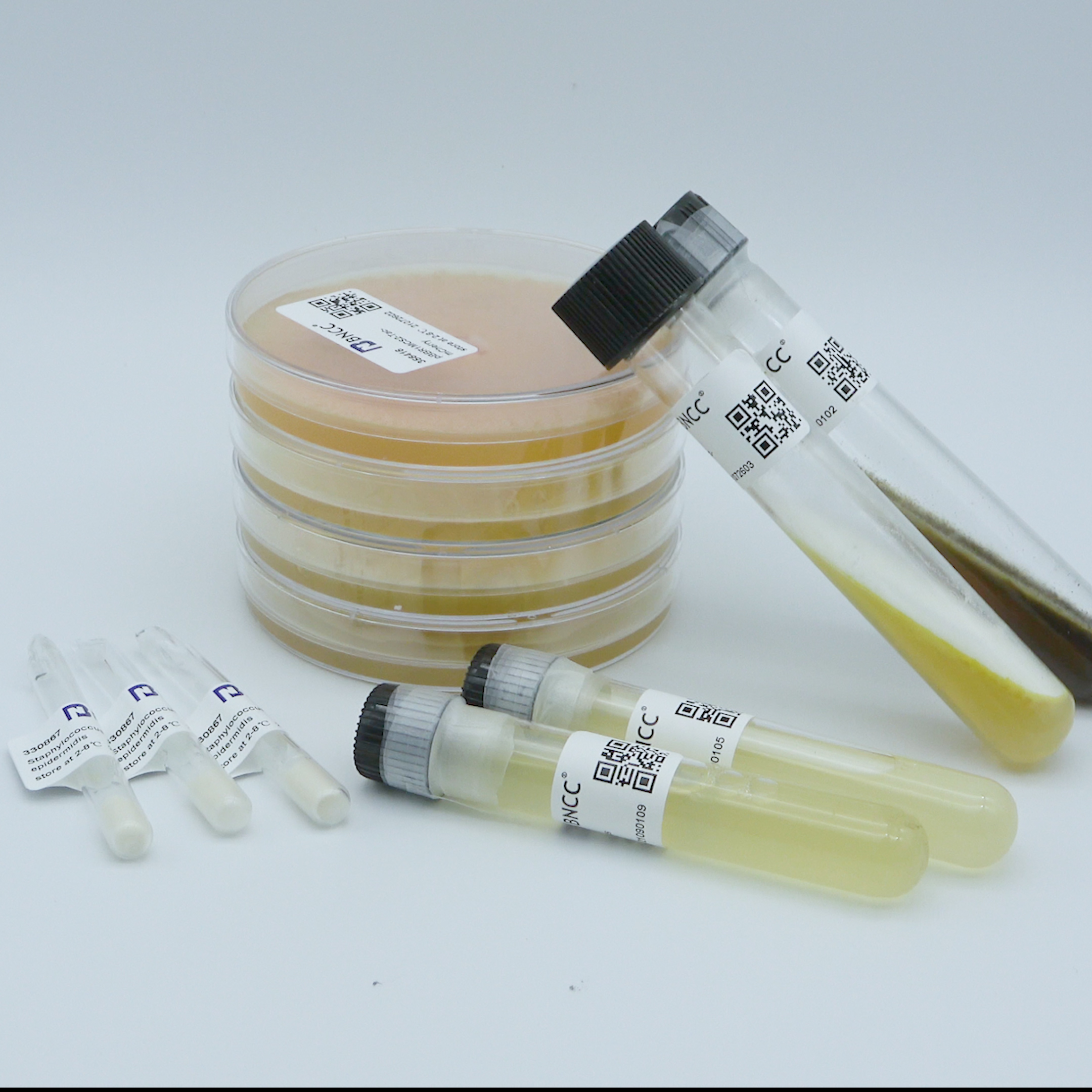
Subculture procedure ① Prepare 2 of the above plates; ② After disinfecting the surface of the ampoule tube, open it in a safety cabinet, burn the top with an alcohol lamp, quickly drip sterile water to break it, and then use tweezers to crush it; ③ Take 0.5mL of sterile water (placed in an anaerobic environment for 24 hours) and transfer it into a freeze-drying tube. After fully dissolving the bacterial powder, transfer it into 2 plates at a rate of 200 μ L per Agar plate and apply evenly; ④ Place the petri dish under the above cultivation conditions for cultivation, and once the bacterial strain grows, it can be used.
Growth conditions 37 ℃, 24-48 hours, anaerobic
Storage conditions 2-8 ℃
Safety level 1
morphology The isolate is a pure culture of Gram‑positive (blue‑violet) bacilli. It forms circular, opaque, convex colonies (1–2 mm) with irregular margins, a smooth, white surface, and a moist texture, allowing for easy removal.
Sharing mode Public welfare sharing

Lactobacillus acidophilus

Storage conditions: 2~8 ℃

No. 134426

Product format: freeze dried,200ul

Validity period: 6 years

Biosafety level:  1, handle in ultra-clear table or safety cabinet

Receiving notice: if any abnormality is found on the day of receipt, please contact the customer service within 24 hours. If it is overdue, it is deemed that the bacteria are well. The freeze dried culture shall be used up once and shall not be retained. The bacterial viability will resume after 1-2 generation of recovery and can be used normally. Handling instructions of agar slant and suspension liquid is enclosed. Please operate in strict accordance with this instruction, otherwise the replacement of bacteria are not be available in case of aberrant growth and loss of viability.

Growth conditions: 37℃, anaerobic, MRS medium, 24-48h, MRS medium: peptone 10.0g, beef extract 10.0g, yeast powder 4.0g, glucose 20.0g, magnesium sulfate 0.2g, sodium acetate 5.0g, triammonium citrate 2.0 g, 2.0 g of dipotassium hydrogen phosphate, 0.04 g of manganese sulfate, 1.0 g of Tween 80, 20.0 g of agar (without liquid medium), and 1.0 L of distilled water. pH 5.7±0.2. Sterilize at 121℃ for 15min.

Recovery steps:
(1) Prepare a test tube containing 5-10mL of liquid culture medium and 2 plates(place in anaerobic environment for 24hours before usage); 
(2) Open the ampoule in the biosafety cabinet, heat the tip of ampoule in a flame, quickly drop sterile water to creak it, then break it with forceps; 
(3) Draw 0.5mL of liquid culture medium into a freeze dried ampoule, fully rehydrate and transfer the solution to the liquid test tube, mix evenly; 
(4) Inoculate a plate with 0.2mL of suspension liquid, repeat the step to obtain two plates; 
(5) Put all the liquid test tubes and plates under the above culture conditions for cultivation, and the strains can be used when they grow.

Recovery record:  According to the recovery instructions, the results of the recovery are reported as follows:


item test results
viability: good viability,in 48h liquid medium become turbid,  obvious strain layer occurs on the plate; colony is typical on marked plate
colony morphology: (above)

size: 2-3mm ; Shape: round ; Edge: neat ; Transparency: opaque

color: milky white ; Protuberance: middle bulge ; Surface: bright and smooth ; Texture: moist and viscous

Conclusion: good viability, no abnormal colony morphology, qualified


Download certificate
Please set your password: