Mouse liver cancer cells|337950 |BNCC

BeNa Culture Collection

Mouse liver cancer cells-BNCC
  • Hepa1-6-BNCC
  • Hepa1-6-BNCC
  • Hepa1-6-BNCC

Hepa1-6

Literatures(2)
  • Price: Contact
  • number:337950
  • Format:Forzen 1 vial
  • Form:
    Epithelial-like,Polygonal,irregular edge,Monolayer adherent growth
Essential Information References Certificate Related Products
Hepa1-6
Subculture procedure Resuscitation steps: ① Remove the frozen vial from liquid nitrogen or -80 ℃ refrigerator and place it in PE gloves. Quickly immerse it in a 37 ℃ water bath, shake the vial to accelerate dissolution, and dissolve it completely within 1 minute; ② Add the dissolved cell solution into a centrifuge tube containing 9mL of complete medium on a ultra-clean bench, centrifuge at 1000-1200rpm for 5 minutes, discard the supernatant, and resuspend the cells in 1-2mL of complete medium. ③ Add the cell suspension into a T25 flask containing 5-6mL of complete medium and place the flask in an incubator.
Cell passage: ① Remove the medium, rinse twice with PBS , and add 1-2mL pancreatin (0.25% Trypsin + 0.02% EDTA); ② Observe the digestion situation under the microscope. When the cell edge shrinks and the adherent is loose (a pasteur pipette can be used to suck up some pancreatin and gently blow somewhere in the cell layer, and the cell layer can be seen to detach with naked eyes, I .e. digestion is completed, otherwise digestion is continued), directly suck out pancreatin, add 5-6mL of complete medium, gently blow the cell layer off. ③ Divide the cell suspension into a fresh T25 flask at a ratio of 1:2, add appropriate complete culture medium, mix the cell suspension evenly, and culture it in the incubator.; ④ Pay attention to changes in the pH value of the culture medium and cell density, change the medium regularly (2-3 times a week), and repeat the passage operation or cryopreservation when the cell density reaches 80% -90%.
Growth conditions 37°C; 5% CO₂ + 95% air
Safety level 0
morphology Epithelial-like,Polygonal,irregular edge,Monolayer adherent growth
Sharing mode Public welfare sharing

Hepa 1-6 mouse liver cancer cells

Adherence, epithelial cell-like

No.: 337950

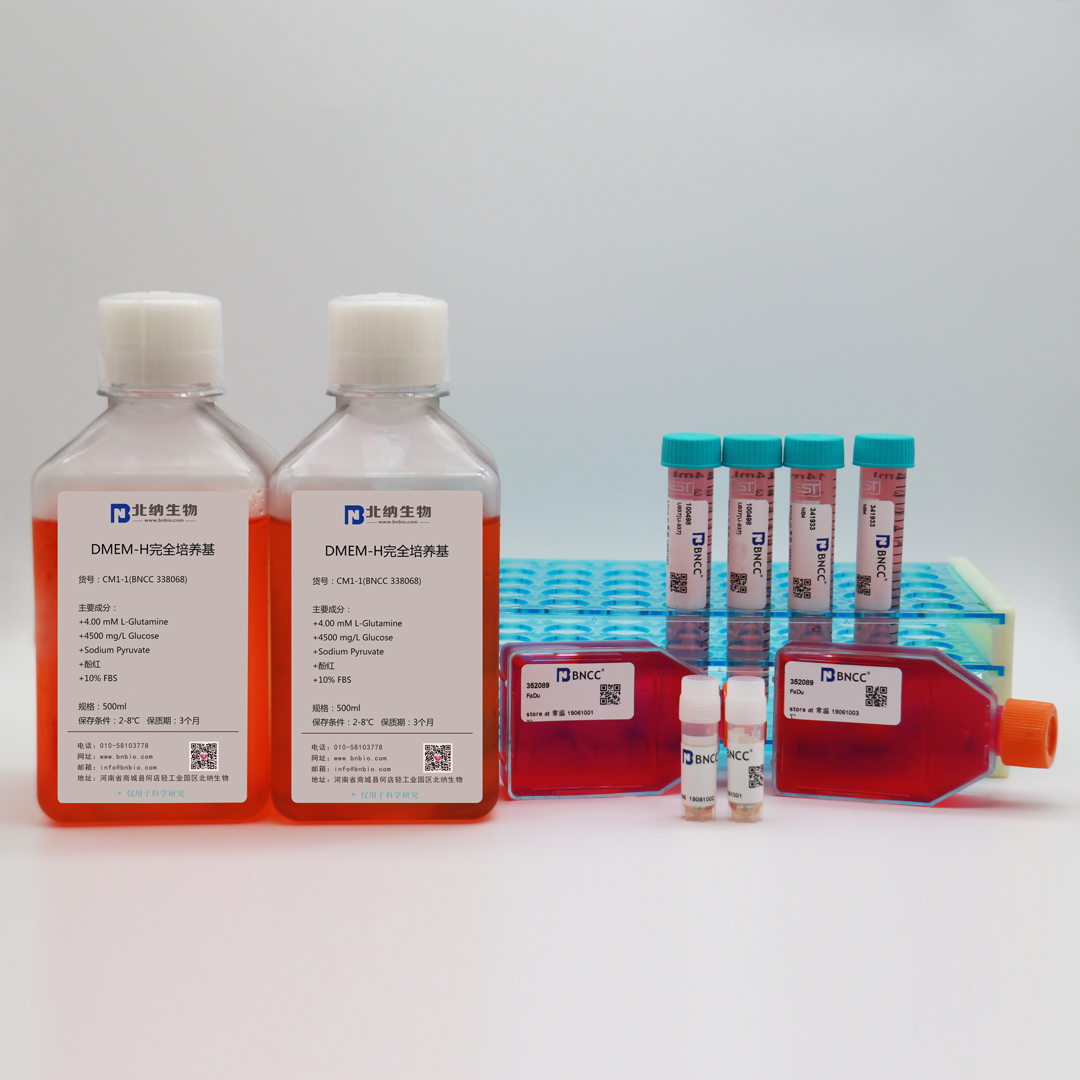
Product format: 2ml frozen vial x 2, or T25 flask x 1

Biosafety level: 1 , handle in ultra-clean table or safety cabinet

Culture:37 ℃,5% CO2 CM1-1 culture solution

Receiving notice: if any abnormality is found on the day of receipt, please contact the customer service within 24 hours. If it is overdue, it is deemed that the cells are well. For the frozen cells,  it shall be stored in the refrigerator at -80 ℃ upon arrival. If they are not used for a long time, they shall be transferred to liquid nitrogen for storage overnight.  Recovered cells in T25 culture flask, upon receipt, put the culture flask in the incubator for 4h, and then carry out handling procedure. During recovery, each vial shall be used up once and shall not be retained. After recovery, the cells can be passed on to the next generation and can be used normally. Please operate in strict accordance with this instruction, otherwise the replacement of cells are not be available in case of loss of cell viability.

Growth conditions:37 ℃,5% CO2,CM1-1 culture solution. CM1-1 culture solution: 90% DMEM-H + 10% FBS. DMEM-H:DMEM high sugar culture solution, containing glutamine and sodium pyruvate.

Recovery steps:
(1)Prepare a new 100mm culture dish containing 12ml of the above culture medium;
remove the frozen vial from liquid nitrogen or refrigerator at -80℃,  thaw the vial in  37°C water bath for 1-2 minutes. Transfer the vial to biosafety cabinet for culture as soon as the contents are completely thawed.
(2)Draw the solution with a sterile pipette, drip into a new culture dish, and mix it evenly by shaking clockwise;
(3)Put it into incubator (37℃,5%CO2), change the media overnight, and it will grow up in 4-6 days.

Subculture/ cryopreservation:  remove old medium, and rinse twice with PBS, add 2ml of 0.25%Trypsin+0.02%EDTA, do not shake the culture dish during the period. Observed under the microscope, remove most of the trypsin(with 0.5ml left) when the cells detach. transfer it to the incubator for digestion about 2minute, and take it out.

(1) Subculture: terminate digestion with 6ml of CM1-1 culture media, aspirate and dispense  into 3~6 culture dishes.

(2) Cryopreservation: terminate digestion with 3ml of cryopreservation solution (90%FBS+10%DMSO), aspirate and dispense into 3 frozen vials, and cryopreserve at -80 ℃ with a programmed cooling box.

Recovery record:  According to the recovery instructions, the results of the cell recovery are reported as follows:

item quality standard recovery record
viability adherence is observed in 18 hours,  the cell adherence rate ≥ 80.0% in 144hours adherence is observed in 18 hours,  the cell adherence rate ≥ 80.0% in 108hours
cell morphology adherent, epithelial cell-like in CM1-1 culture solution, adherent, epithelial cell-like, polygonal, closely arranged
attached figure
conclusion good viability, and no abnormal cell morphology, qualified


Download certificate
Please set your password: